
Time and speed
One in-game day is 20 real minutes at x1, 10 at x2, 5 at x3, with x4 and x5 above that. A month is a single day, so at x5 a full year takes about 48 minutes.
Time in Fantasy World Manager is a dial with five positions, and the dial is the most underrated design decision in the game. It decides how long a war takes to resolve, how much of a villager's life you actually witness, and how much simulation work your machine has to do per real second.
The five speeds
| Step | Real minutes per in-game day | Status | Source |
|---|---|---|---|
| x1 | 20 | Active | Developer patch notes |
| x2 | 10 | Active | Developer patch notes |
| x3 | 5 | Active | Developer patch notes |
| x4 | no data | Activated in the build | No published rate |
| x5 | no data | Activated in the build | No published per-day rate; a year is stated as ~48 minutes |
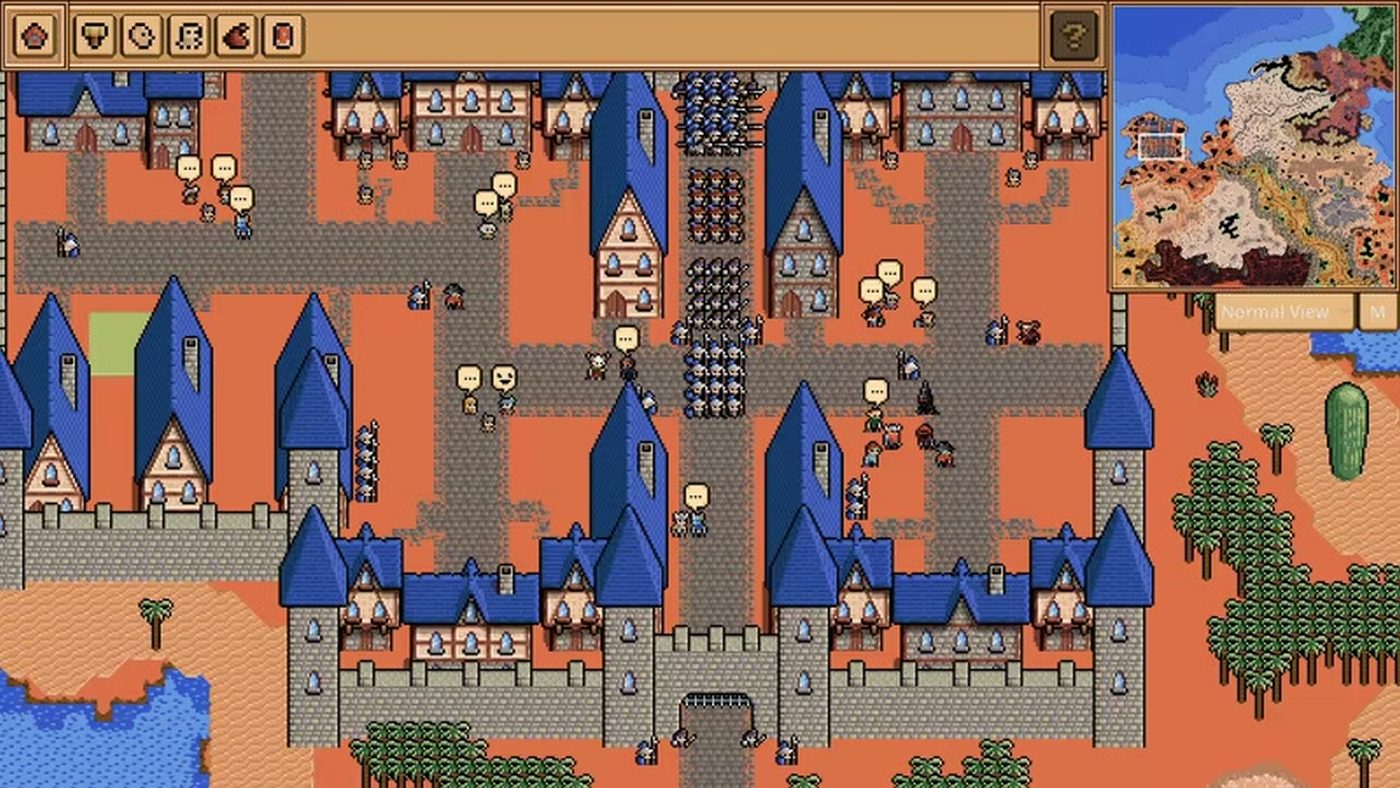
The x1 to x3 figures were published while a month still had five days; the month was later reduced to a single day. The per-day costs are still the best published numbers, but do not multiply them by a month length without checking which calendar you are on.
The calendar
| Unit | Length in the launch build | Consequence |
|---|---|---|
| Day | The base tick | One in-game day is the unit every cost above refers to |
| Month | 1 day | Month labels advance roughly as fast as days |
| Year | 12 one-day months by arithmetic from the 48-minute figure | A year is short enough to watch a generation age |
The HUD reads year, month, day and time, and the speed state sits beside it showing paused when the clock is stopped. Pausing is not a separate speed step - it stops the clock entirely while you build.
At x5 the developer's stated figure is that a full year takes about 48 minutes. Twelve one-day months at 4 minutes per day gives exactly that, which is the arithmetic implied by the two published facts rather than a published per-day rate for x5.
What speed actually changes
Speed changes how much simulated time passes per real second. It does not change what the simulation computes - the same needs, quests, movement and combat run, just more of them per minute.
That produces a trade-off worth internalising:
| Speed | You see | You miss |
|---|---|---|
| x1 | Individual decisions, conversations, single fights | Progress; a year takes hours |
| x2-x3 | The shape of a season: who moves, who gains | Fine detail inside a single encounter |
| x4-x5 | Generations, wars, map-scale change | Almost every cause; you get outcomes |
This is why the guides here keep recommending x2 or x3 for learning. At x5 a border war is over before you can open the faction inspector, and the only evidence left is a changed map.
Performance is the second dial
Simulation cost scales with entity count and speed. A populated map at x5 is the heaviest configuration the game offers, and it is also the one where the game is hardest to read.
If a world stutters, the first fix is not graphics - it is speed and population. The performance page covers the rest, and the simulation table lists which systems are doing the work.
Choosing a speed for what you are doing
- Learning the simulation: x1 or x2, small map, ten in-game days per session.
- Testing a change: x2, with a save from before the change, replaying the same ten days.
- Watching a story: x3, one region on screen, faction inspector open.
- Long-run world evolution: x5, and accept that you will read outcomes rather than causes.
- Building: paused. The editor does not need the clock.